

Catching Wind: Inside the World of Windsurfing
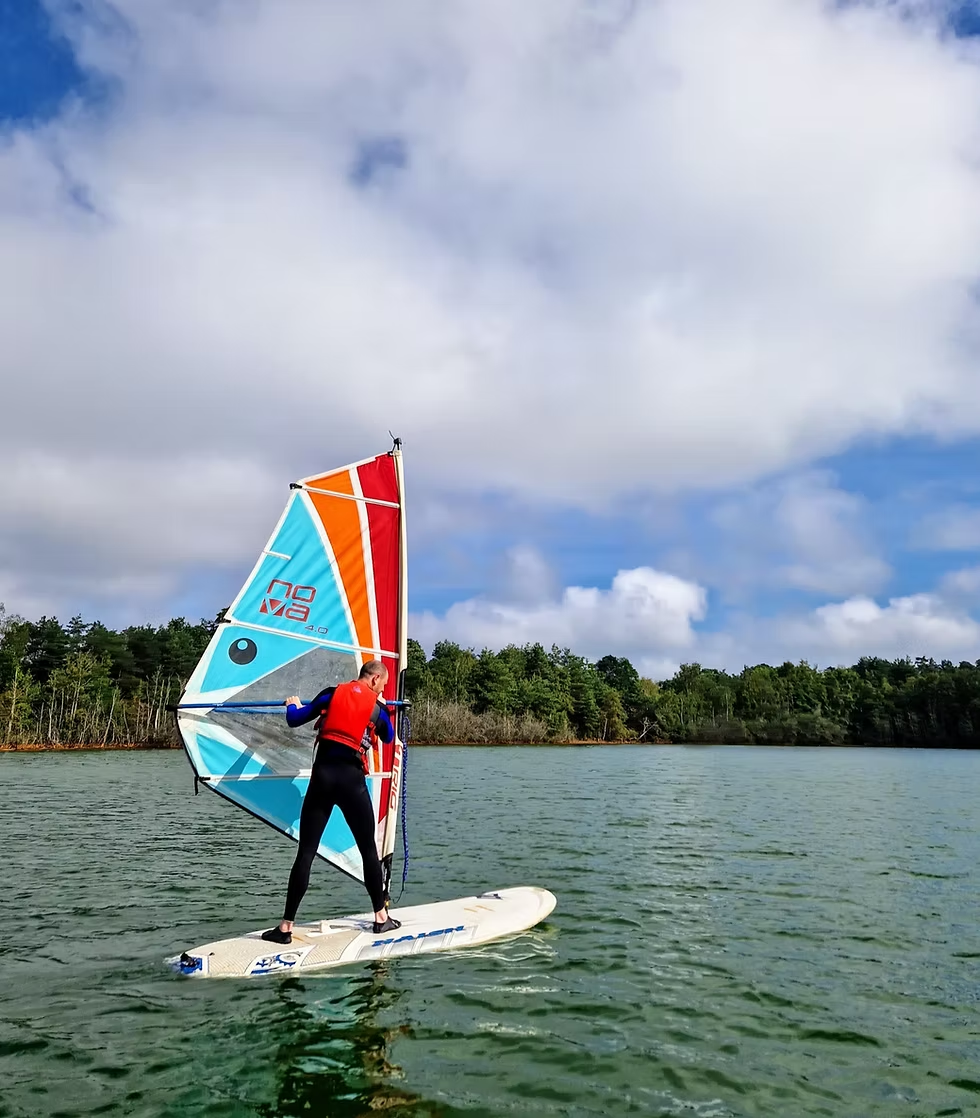
Windsurfing was born in the 1960s when a sailor and a surfer in California decided, more or less on a whim, to bolt a sail onto a surfboard. Six decades later it’s a genuinely global sport with its own World Tour, its own legends, and a learning curve that humbles almost everyone in their first hour on the water, and then, for the people who stick with it, rewards them with one of the purest feelings on the ocean.
The progression is unusually well mapped for a sport that looks this chaotic from the beach. Total beginners start with balance, uphauling the sail out of the water, and steering by leaning the rig forward or back. From there it’s tacking and gybing to turn, learning to handle stronger wind, and the genuine milestone moment, harness use, which turns windsurfing from an arm-wrestle into something you can sustain for hours. Waterstarting, footstrap sailing, and the carve gybe come next, and only once those are second nature does anyone get near wave sailing or the aerial tricks that look effortless on video and take years to actually land. A typical beginner course runs about ten hours over a long weekend and costs somewhere around €250 in a group, considerably less than the kitesurfing or wingfoiling lessons sold alongside it at most beach schools.
Teaching the sport properly has its own certification ladder, just like skydiving or skiing, run by national bodies rather than one global one: WIPA in the US, VDWS in Germany, and similar associations across most of Europe. The pattern repeats: a multi-day course combining a practical sailing exam, a teaching demonstration, and a written theory test, with Level 1 getting you in front of absolute beginners and higher levels unlocking advanced manoeuvre coaching. None of it is cheap or quick: expect several hundred euros and a real time commitment even for the entry tier, and full gear ownership for a serious rider runs $2,500 to $3,000 once board, sail, mast, boom, harness, and wetsuit are all accounted for.

The sport’s geography has always been shaped by wind, not waves. Tarifa, at Spain’s southern tip where the Atlantic funnels through the Strait of Gibraltar, is considered the design and testing capital of the entire industry. Maui’s Ho’okipa Beach is windsurfing’s spiritual wave-sailing home, host to the Aloha Classic every October when the north shore delivers genuinely enormous swell. Fuerteventura’s Sotavento beach has run a World Cup for the better part of four decades. None of these are accidents: they’re simply the handful of places on earth where wind, water, and geography line up consistently enough to build an entire industry and competitive scene around.
At the top of the sport sits the PWA World Tour, windsurfing’s own professional circuit, running slalom, freestyle, and wave disciplines across eight to twelve stops a year on some of the best wind on the planet. A handful of names dominate the sport’s history in a way few other action sports can match: Robby Naish, who turned professional as a teenager and stayed dominant for over a decade; Björn Dunkerbeck, who won twelve consecutive overall world titles and holds a Guinness World Record for the most championship titles of any athlete in any sport; Antoine Albeau, with 22 world titles across disciplines. The sport has also quietly absorbed and evolved alongside kitesurfing and, most recently, wingfoiling and foiling, its own foil-powered cousin that’s now fast becoming as competitive and well-attended as windsurfing’s original disciplines, sharing the same beaches, the same World Cup events, and increasingly the same riders.

Outside the competitive tour, windsurfing still draws a particular kind of person: someone genuinely interested in reading wind and water rather than just riding whatever’s in front of them, patient enough to fail repeatedly through the early uphaul-and-fall stage, and usually happiest somewhere remote and breezy rather than crowded and flat. Careers built around it look a lot like skydiving’s or skiing’s: instructors at beach schools worldwide, professional riders sponsored by board and sail brands, shapers and designers refining equipment in places like Tarifa, and photographers and videographers chasing the kind of footage that makes the next generation want to try it for themselves.
This is editorial coverage of the world of windsurfing generally, not an endorsement of any specific school or brand. Browse boards and gear on our On the Waves page, or explore the rest of Obsessed by Ocean.