
Fashion — Footwear
The Year Men Got Serious About Their Feet
Inside the loafer revival, the Chelsea boot's second act, and why 2026 is quietly turning its back on black.

Something has shifted in men's footwear this year, and it isn't a new silhouette or a shock colourway. It's a change in appetite. After a decade of chunky soles, maximalist branding, and shoes designed to be photographed rather than worn, 2026 is the year men started buying with restraint. The word circling every showroom and street-style shot this season is intention — fewer pairs, better construction, and a wardrobe built to outlast the trend cycle rather than chase it.
Nowhere is that clearer than in the loafer's full return to power. After three years of a slow build, the penny loafer has arrived as the shoe doing the most work across the widest range of occasions — tailored looks, weekend fits with wide-leg denim, even dressed down under a blazer. The fit is everything: clean through the vamp, snug at the heel, never sloppy. Leather remains the default, but suede is having a genuine moment alongside it, in caramel, chocolate, burgundy, and a clean black that still holds its ground.
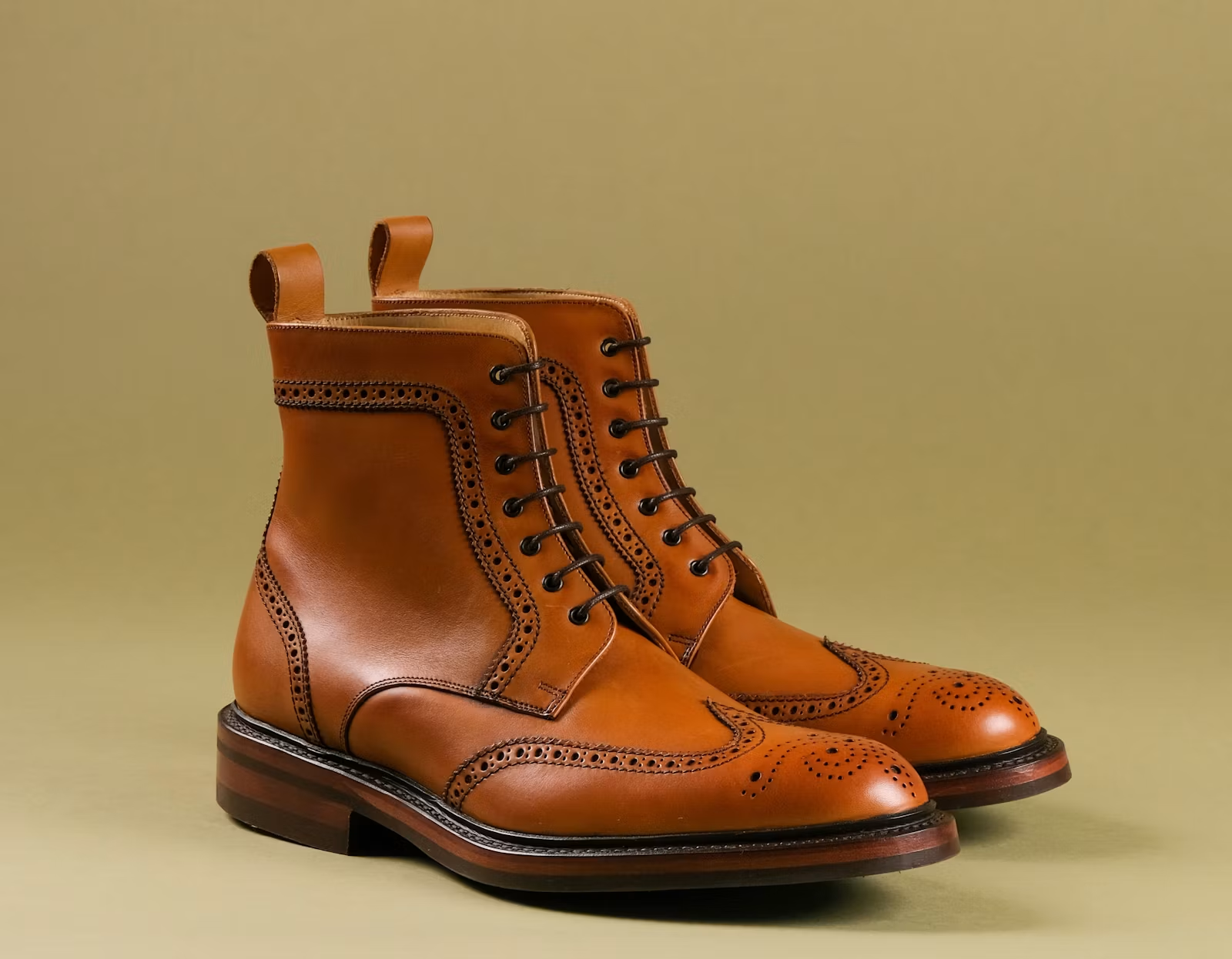
Milan's fall runways told a similar story from the top down. Prada and Paul Smith leaned into reworked heritage lace-ups and loafers with contemporary twists, while Ralph Lauren sent out suede hiking boots with colourful laces alongside snowboard-inspired silhouettes. Brunello Cucinelli paired sharpened Chelsea boots with straight-leg jeans, and Saul Nash's collaboration with Manolo Blahnik pushed the Chelsea into sleeker, pointier territory. The throughline across the boot-heavy shows was heritage shapes rebuilt with modern proportions rather than reinvented from scratch.
European men, specifically, are leaning further into refinement than anywhere else this year. Where North America is still mixing rugged workwear boots with luxury sneakers, the European read is sleeker: Chelsea boots in rich suedes and polished leathers, hand-finished Oxfords and monk straps that put the shoemaker's craft on display, and derbies worn deliberately with denim as a quiet flex rather than an accident. It's a wardrobe built around fewer, better pairs — the opposite of a closet full of sneakers rotated by day of the week.
Boots, this year, are not a side category. The Chelsea boot has become the shoe filling the gap between formal and casual better than anything else on the market — its elastic side panel and clean pull-tab work equally well with raw denim and suit trousers. Right behind it, the Chukka is having its own renaissance, rebuilt with premium waxed suedes in black, chocolate, and tobacco, and Goodyear welt construction meant to be resoled for decades rather than replaced in a year. If you're adding one boot this season, it's one of these two.

So, black or tan? The honest answer is tan is winning the argument. Warm browns, aged leather tones, sand, and rust are dominating both runway and street style this year, with tan loafers and caramel boots replacing what used to be the safe black default. That said, black hasn't disappeared — it's simply lost its position as the automatic first choice. And for anyone who wants to push further, the runways offered plenty of departures: Hermès showed tonal two-tone boots in warm beiges, Balmain sent out khaki, and a handful of houses played with an unexpected pop of red. Multicolour isn't the mainstream story of 2026, but it's very much present for anyone building a statement pair alongside their neutrals.
The retro runner and the dress-sneaker crossover round out the picture — thick midsoles and heritage colourways for off-duty days, a cushioned sole hidden under a classic derby or loafer upper for everything else. But the real story of men's footwear in 2026 isn't any single shoe. It's the return of buying like it matters: fewer pairs, better leather, and boots and loafers built to earn a decade of wear rather than a season of attention.
Browse the boots, loafers, and dress shoes shaping this season in our Shoes collection.