
Riding the Thermals: Inside the World of Hang Gliding

Hang gliding traces its modern lineage to a NASA engineer who never meant to invent a sport at all. Francis Rogallo designed his self-inflating flexible wing in 1948 as a spacecraft recovery system; it took another two decades before recreation-minded tinkerers in the 1960s and 70s realised you could strap yourself underneath one and run off a hill. Today it sits as one of the purest forms of flight still legal to practice without an engine, a licence from a government, or really anything beyond a wing, a harness, and a hill or a tow.
That last point genuinely surprises people: in the US and Canada, hang gliding is a self-regulating sport. There’s no government pilot’s licence required to run off a cliff with a glider strapped to your back. What actually controls who flies where is the United States Hang Gliding and Paragliding Association’s own rating system — H1 through H5, Beginner to Master — and almost every flying site in the country simply refuses to let you launch without the right card in your pocket. It’s self-policing in the truest sense: the community protects itself because the government never had to.
Getting your first rating, H1, just requires consistent straight-line launches, flight, and landings off a training hill — typically three to twelve lessons depending on the student. H2, the Novice rating that opens up most foot-launch mountain sites, demands coordinated turns and accuracy landings, usually six to eight more days of flying. From there the ladder gets serious: H3 requires a minimum of 30 flying days, 90 logged flights, and 10 hours of solo airtime, plus a verbal flight-plan briefing before every witnessed flight. H4, the Advanced rating that unlocks essentially every site in the USHPA system, demands 250 flights and 75 hours of airtime across at least five different sites. Tandem Instructor status sits above even that — an H4 rating, 200 hours or 500 flights logged, and a dedicated instructor clinic before you’re trusted with a stranger hanging beside you.
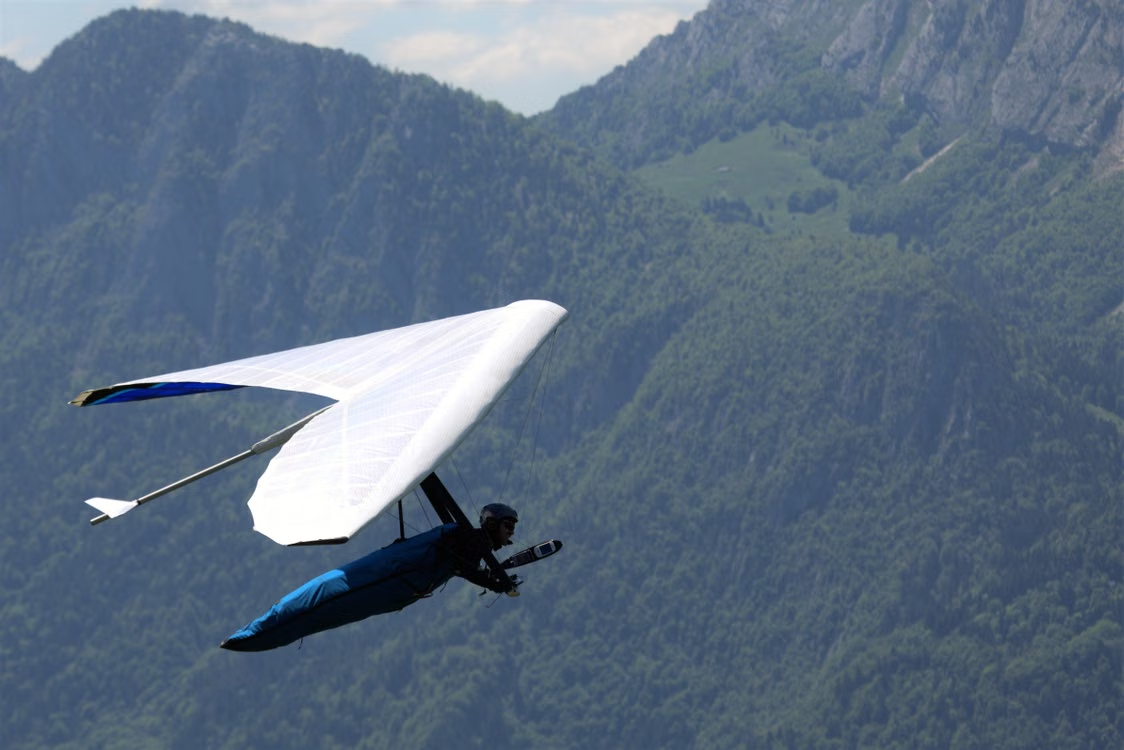
How you get airborne in the first place splits into three real methods, and the choice shapes both your cost and your learning curve. Hill training is the classic foot-launch method — cheapest, at $700 to $1,100 for a full Novice rating, but physically demanding and entirely dependent on living near a decent hill. Aerotow, where an ultralight aircraft tows you and an instructor up on a tandem glider, is the least physically demanding and gives the most air time per lesson, but it’s also the most expensive route and means you won’t solo until training is essentially complete. Scooter towing sits in between — a modified motor scooter acts as a ground winch, students solo from day one at five to eight feet, and an instructor can cut the tow line the instant anything looks wrong. A full beginner-to-Novice package across any method typically runs $700 to $2,000 in lessons alone, climbing to $5,000-plus once a harness, helmet, reserve parachute, and your first glider are factored in.
The places that have built genuine cultures around this are called flight parks, and a handful of them function as something close to pilgrimage sites for the sport — Lookout Mountain in Tennessee, Kitty Hawk Kites on North Carolina’s Outer Banks (within sight of where the Wright Brothers actually learned to fly), Wallaby Ranch in Florida. These aren’t just training grounds; they’re full communities with bunkhouses, pro shops, glider storage, and a culture built specifically around looking after newer pilots. Site fees for visiting pilots run modestly — often as little as $25 a week — but the unwritten rule everywhere is the same: a higher-rated local pilot decides whether you’re actually ready for their hill, paperwork or not.

Pilots come from a genuinely wide cross-section of life — ages 14 to past 70, and the sport has a track record of welcoming pilots with physical limitations that would rule out plenty of other adventure sports, provided they have functional use of their arms and hands. What unites them is less a personality type than a shared obsession with reading the sky — thermals, ridge lift, wind gradients — the same atmospheric literacy that turns a short sled-run flight into hours of genuine cross-country soaring once a pilot reaches Intermediate level and beyond. For the smaller number who turn it into a career, the paths run through flight-park ownership, tandem and aerotow instruction, gear sales and repair, and competitive cross-country and accuracy-landing events that exist at both national and world championship level.
This is editorial coverage of the world of hang gliding generally — not an endorsement of any specific flight park or instructor. We’re building out our own Skybound page with real gear and booking partners on the way — take a look at what’s live so far.